 EN
EN

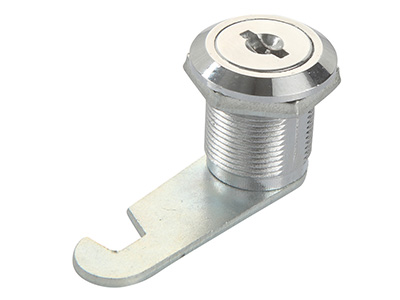
Not all heavy duty garage door lock sets perform the same in demanding environments. The everyday Heavy Duty locks wear out within months in Heavy Duty applications such as coastlines with salt spray, mining facilities with high-pressure washdowns, food processing plants, or subzero cold stores. Reliability should not be stated in the marketing rhetoric of a product but rather engineering-based. Using the knowledge below, specifiers can avoid costly failures and security incidents. Understanding why a reliable lock is dependable is paramount. This article will go into the four ideal features that define a visually rugged, dependable lock:
Material Selection: Marine-Grade Stainless Steel and Corrosion-Optimized Alloys
The foundation of any robust harsh weather lock is the material used. Standard steel rusts. The common zinc/aluminum alloy form a white corrosive layer and become brittle. Even so-called stainless steel (Grade 430 or 201) use lower chromium and nickel percentages than is necessary for pit-corrosion resistance in chemically aggressive/salty environments.
The truly reliable heavy duty locks have a 304 or 316 stainless steel latch assembly. Molybdenum is added at 2-3% in 316 stainless steel, offering excellent resistance to crevice and pit corrosion in salty environments. The latch bolts, locking rods and hinge pins at WenZhou MeiGu Lock Industry Co., Ltd. Are all fabricated from 316 stainless steel to meet coastal & off-shore needs. In the case of non stainless parts, reliable locks use zinc/aluminum die castings at carefully controlled purity levels-i.e. No iron, no copper-then pass-ivated through multi-layered plating-i.e. copper plating, nickel plating, followed by a clear or black epoxy coating-in order to achieve 500 plus hours in salt spray testing (ASTM B117). A lock that just states “zinc alloy” or “stainless steel” should be considered with great suspicion. True material specification is key to repairability.
Sealing Architecture: IP Ratings and Multi-Barrier Protection
Water and dust can ruin locks. Water enters through the keyway, the house-grip and handle shaft, and the mounting screws and the separation of the housing from its mounting surface. Internally, it can cause the lock to rust, freeze during winter, and wash away lubricants and possibly short circuit electronic components. Truly reliable locks have specific engineering and design that address these ingress pathways and achieve recognized IP ratings.
The IP65 or IP66 rating indicates water jet and dust tight and robust for severe marine applications. IP65 rated cylinder locks include multiple sealing barriers: a primary seal at the keyway, another at the cylinder/housing separation, silicone gasket at each mounting flange, and finally, the handle pivots are sealed with a ball bearing assembly. The rod passing through the house-grip and ballot passes through rubber boots at both ends to prevent debris and moisture entering. In the worst case environments, some fully potted electronic modules are used to completely remove air gaps and condensation. A general statement for "weather resistant," or "weather rated" can be unreliable; verify and quantify via specific IP rating with a justification of the sealing system.
Lubrication Strategy: Wide-Temperature and Contamination-Resistant
An often overlooked, yet critical design aspect of a reliable product. Traditional greases, formulated from petrochem gelling, solidify and " gum up" in temperatures below freezing point of -10°C. Similarly at higher temperatures over 80°C, greases thin out, become ineffective and lose viscosity to form "sludge". Wet lubricants attract dust particles into clearances of moving parts causing significant wear in dusty environments.
Application-specific lubricants are used in truly reliable heavy-duty locks. The MeiGu high-temperature padlocks use dry-film lubricants, molybdenum disulfide, or graphite, and remain stable at temperatures of 300°C ( furnace garages, foundries). Synthetic antifreeze greases maintain viscosity even when stored in below freezing conditions of -40°C. Permanent grease filled, sealed ball bearings (Silent Bearings) require no periodic re-lubrication for dusty environments, and in food-processing, the use of no-wet-lubricant bushings made from materials such as nylon and acetal exclude contamination and maintain reliability. If a lock states simply that it is "lubricated" then it should be dismissed; reliable locks specify what lubrication is used.
Mechanical Margins: Oversized Components and Redundant Engagement
High- and low-temperature ranges, freeze-lock in the keyway, impact from collisions with heavy equipment or structural displacement from thermal expansion all introduce abnormal stress to the components of a lock mechanism. Truly reliable locks have intentional mechanical margins to maintain performance; component size is over-specified.
Residential door lock rods are only 6mm thick. 4mm is possible for some industrial applications. A heavy-duty, dependable harsh-weather lock uses 12 mm (some 16 mm) diameter stainless steel rods. MeiGu swing handles are equipped with up to 16 mm diameter stainless steel rods, and they engage the strike-plate at a depth of at least 20 mm, ensuring proper engagement and locking security even with minor door or frame distortions caused by impacts and thermal expansion. Instead of two mounting screws, robust plate mountings utilize four or six mounting screws in order to distribute stress more evenly across the panel, and provide the assurance of security if one screw should fail. Stainless steel through hardened hinge pins, 30% thicker than standard hinge pins also contribute to the strength and durability of reliable locks. The use of mechanical margins allows a lock to continue operating and secure a door, even when conditions exceed that which was specified: perhaps higher concentrations of salt-spray than predicted, or temperatures lower than what was predicted. The key to reliability is not just meeting specification, but exceeding it with the reasonable, deliberate addition of margin.
Conclusion
There are four distinct features of a truly reliable lock that will perform under extreme environmental conditions: Marine-grade (or corrosion-optimized) alloys and stainless steel, Multi-barrier seals with verifiable IP rating, Application-specific, wide-temperature lubricants, and Oversized parts and redundant engagement points. WenZhou MeiGu Lock Industry Co., Ltd., with 15 years of combined experience in CNC molding, die casting and surface treatments, manufactures all its locks with these requirements in mind. Whether an IP65 cylinder lock for a coastal garage, a high-temp padlock for a furnace access door, or a 316 stainless swing handle rod-controlled lock for a mining facility, you will find solutions for all environments at www.meigulock.com, solutions based on reliability, not on empty claims.