 EN
EN

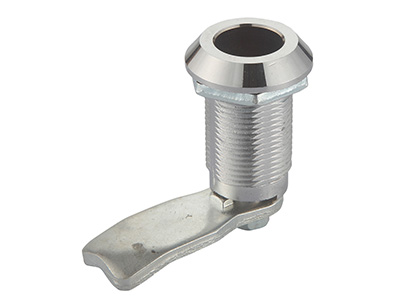
Building durable garage door hardware is an entirely different proposition from producing an enlarged residential lock. A properly manufactured heavy-duty lock is designed with standards that encompass materials, precise dimensioning, cycle endurance and environmental proofing in order to offer reliable operation in the field. Loading docks, warehouses, important infrastructure locations, and industrial plants must be equipped with hardware whose functionality can be relied upon to meet the requirements set by established engineering standards. This paper offers an examination of four critical standards that influence the engineering design and manufacture of heavy-duty garage door hardware.
Material Certification and Traceability Standards
Precise control over materials is a fundamental component of any engineering design. Untraceable, uncertified materials introduce unnecessary risk into the design; slight deviations in the chromium content in a batch of stainless steel could lead to early rusting and an unacceptable amount of lead in an aluminum die cast could lead to a brittle component. Manufacturers of heavy-duty locks take material certification seriously.
At WenZhou MeiGu Lock Industry Co., Ltd., raw materials procured by the company must meet rigorous specification requirements with mill test reports for all incoming materials. Every stainless steel component is marked with its appropriate 304 or 316 specification and chemical composition-including 18% chromium and 8% nickel in a 304 steel and 18% chromium, 8% nickel and 2%-3% molybdenum in a 316 steel-verified through batch testing. In any aluminum die casting, impurity content is closely monitored, keeping levels such as that for copper below 0.1% and that for iron below 0.075%, in order to prevent intergranular corrosion. This material certification gives the manufacturer traceability-should an unforeseen failure occur, that lot can quickly be traced and investigated. Many of MeiGu’s customers who operate within government, energy, or transportation sectors have specific contractual stipulations regarding material traceability-locks that cannot meet the defined material specifications will not meet the other long-term operational requirements they are looking for.
Dimensional Tolerances and CNC Machining Standards
A well-designed lock, utilizing top-quality materials must also function precisely when assembling. Overly wide clearance between the many moving components of a lock could lead to premature wear of the hardware, as well as provide an opportunity for prying by an unauthorized party. Narrow clearance, conversely, leads to sluggish, binding operation of the hardware. To produce hardware to tight dimensional tolerances, precision CNC machining is employed.
A 5,000-sq-ft manufacturing facility owned by MeiGu features cutting-edge CNC machining centers capable of operating at tolerances of 0.05mm on crucial component features, such as gear teeth, cam surfaces, and the rod engagement surface-a specification four times tighter than that for most consumer-grade hardware. These close-toleranced parts assemble with much closer tolerances over the full range of expected operating temperatures. MeiGu utilizes gears that are machined to an AGMA (American Gear Manufacturer's Association) quality level Q10, thus having minimal backlash. The extreme manufacturing precision also helps to maintain consistent operation, enabling proper interaction between the strike and the bolt for engagement depths between 15mm and 20mm with an appropriately controlled engagement range in mind for ease of field fit up. Hardware rated for heavy-duty application such as this is engineered and machined to perform as specified under extreme use cases.
Cycle Testing and Load Rating Standards
When specifying heavy-duty hardware, the focus is almost entirely on performance measured through quantified metrics, rather than subjective descriptors. How many operations can a lock assemble be expected to endure? How much stress can the hardware assembly take? Operational cycle testing, static and impact testing all become standards that mechanical performance relies upon. The load rating for heavy-duty hardware indicates the measured mechanical strength of the hardware assembly.
MeiGu’s internal testing is supplemented by third party verification of their heavy duty lock assembly design and manufacture. Using American National Standards Institute / Builders Hardware Manufacturers Association (ANSI/BHMA) A156 standards for cycle testing (typically 100-500K cycles versus 10K cycles for residential hardware), MeiGu’s heavy duty locks undergo exhaustive operational cycling. Prying tests on the swing handle/rod assemblies are conducted on every design, with a standard requirement of exceeding 2,500N lateral load without engagement failure. Testing for impact, where a specified weight is dropped on the assembly from a determined height, verifies the mechanical strength of components and hardware assemblies, rods, bodies and handles alike. Salt spray testing to ASTM B117 standards is carried out for over 500 hours to measure corrosion resistance and tests at expected operating temperature ranges of -40 °C to 80 °C are conducted to verify full operational functionality. When an engineering firm knows that hardware has passed such tests and has been verified by a third party, they have the confidence to spec it in the application, no matter the conditions.
IP Rating and Environmental Sealing Standards
Regardless of how robust a mechanical assembly is, even hardware that performs exceedingly well under normal circumstances will suffer from an outdoor application over time. High pressure wash downs and the introduction of water and dust will degrade hardware, particularly mechanical hardware, which is not designed for outdoor environment. “Weather resistant” has proven to be a woefully imprecise description. It is IEC 60529, a set of internationally recognized IP standards, that now reliably communicates level of dust and water protection of electronic and mechanical assemblies. The first digit indicates dust protection level (6 is dust-tight) and the second digit indicates water protection level (5 is for water jets, and 6 is for high seas or powerful jets).
MeiGu supplies cylinder locks in both IP65 and IP66 ratings as standard. This is accomplished through the careful application and design of seals which may include O-rings for all shaft penetration locations and a boot on all rod entries, coupled with the appropriate silicone gasketing for mounting flanges. These items are installed at the point of assembly to assure proper sealing for the chosen IP level. Each batch of parts receives testing for IP certification at MeiGu’s facility. For extremely rugged environments and specific demands MeiGu engineers and builds locks with IP67 (submersion under normal pressure conditions for 30 minutes) and IP69K (high-pressure, high temperature washing). By specifying hardware with an IP rating, the customer can be assured of the exact protection offered as part of the design rather than being dependent upon unverified marketing information.
Conclusion
Manufacturing superior, dependable heavy-duty garage door hardware requires a dedicated focus upon stringent engineering standards in the form of material certifications, tight dimensional tolerances and precise CNC machining, reliable cycle and load testing, and IP environmental sealing. Fifteen years of manufacturing experience, combined with a dedicated 5,000-sq-ft production facility has enabled WenZhou MeiGu Lock Industry Co., Ltd. To become a premier supplier for hardware suited to a variety of applications-from swing handle/rod systems and IP65-rated cylinder locks to specialized 316 forged stainless steel products. Clients specifying hardware for critical infrastructure applications like those in the transportation, energy, or warehouse and loading dock industries will find the quality, experience, and customer service at MeiGu Lock. Please visit us at www.meigulock.com.