 EN
EN

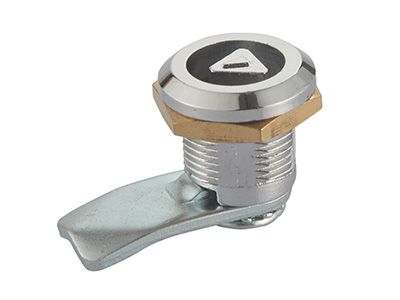
Durability of a heavy duty garage door lock is a critical feature that relies on the appropriate selection of materials. A lock that can only last six months will be completely useless, compared to one that operates efficiently for ten years. In tough environments like warehouses, loading bays, coastal areas and extremes of temperature, material choice is key for the components of a lock, to maintain resistance to corrosion, to prevent breakage from impacts and to maintain accuracy of engagement mechanisms. Here are four types of materials that will give genuine durability for your heavy duty garage door lock.
304 and 316 Stainless Steel Forgings for Load-Bearing Components
Lock cylinder bolt, lock rod, lock plate and the lock hinge pins will all come under direct load. Thus, these will need to be resistant to shearing, cutting, breakage, bending and corrosion. If standard carbon steel is used, then the material will be prone to rust; lower grade stainless steels like 430 or 201 don't contain enough chrome and nickel to prevent corrosion and pitting, especially in saline or chemically aggressive environments. The parts mentioned above should ideally be manufactured from 304 or 316 stainless steel by WenZhou MeiGu Lock Industry Co., Ltd.
These different grades both offer great strength: 304 stainless has a tensile strength of at least 515 MPa with high resistance to general corrosion, while 316 is the perfect alloy for coastal areas or areas where road de-icing salt is prevalent due to its enhanced chloride induced pitting and crevice corrosion resistance. Forging the steel instead of machining from bars will ensure that there are no internal voids and it will be a lot stronger, capable of absorbing a shock load much better than that machine-cast part. Without the correct material specification, the corrosion protection may be uncertain. However with 304 or 316 forged stainless steel, it's certain, so long as your supplier uses it correctly.
Zinc/Aluminum Die Castings for Complex Housings and Handles
This process is required for intricate designs and therefore, a handle or a housing cannot be machined cost-effectively. Die casting produces parts with good design characteristics and relatively high strength from ZAMAK3. This material, however, will suffer from inter-granular corrosion which will eventually turn the item to a white rust and then turn to crumbling powdery metal after only short exposure to humidity and/or corrosive chemicals.
To avoid this, MeiGu utilizes specialist zinc/aluminium alloys that are formulated to minimize impurity levels – keeping copper and iron contents under 0.1%. This composition eliminates inter-granular corrosion; the aluminium (approx. 3-5%) adds ductility to the casting giving greater impact resistance; the minimum thickness of all stressed areas are around 3-4mm which provides stiffness without over-weight. Furthermore, each item has been thoroughly plated, typically 3 layers (Copper, Nickel, Epoxy or Clear Lacquer), that is tough, providing a good barrier to prevent corrosive agents getting to the metal beneath; all surfaces must survive 500+ hrs of salt spray test ASTM B117 before being accepted. If this test is not conducted, the metal die cast housing could be ruined in months as opposed to years.
Hardened Steel Inserts for Anti-Drill and Anti-Shear Protection
A cylinder and/or internal gear box would be the ideal point to drill or bore to access the inside of a lock. Standard grade stainless steel cannot withstand this against a decent carbide drill bit. To overcome this issue, MeiGu uses heat-treated steel inserts in any part of the casing of a cylinder or of an internal mechanism of any type.
These may be of through-hardened steel (55-60 HRC) or tungsten carbide composites for the absolute highest security applications. The drill bit will just slip or snap when faced with these, or if a cutting device is used to shear the pin, then case-hardened pins will resist the shear. Even retaining screws would use hardened steel, possibly with a spanner or one way drive as a further deterrent, these parts would never be visible from the outside.
Engineering Polymers and Sealing Elastomers for Environmental Protection
While the other metals can withstand the stresses involved, corrosion can occur if water, dust or other contaminants are allowed to penetrate into the moving parts. To seal the gaps and prevent contaminants from entering, seals and bushings are required. In the first instance, you do not want to use just plain rubber because this will degrade from UV and heat, become brittle with cold, but in engineering grade polymers/elastomers all these parameters are fully considered depending on the individual product being produced. In this instance, UV-stabilised silicone or fluoroelastomer (Viton) will give a working temperature range from -40°C to +200°C.
Nylon or Acetal (POM) can be used for the rod guides as these have good low friction sliding characteristics and are ideal for dry applications as no lubrication is required, which would pick up abrasive dust. The key hole shut-off mechanism should be of a TPE material spring loaded with geometry to snap shut and seal when not in use. All the relevant materials have to be chemical resistant if exposed to detergents/cleaning fluids and salt spray tests would also be a requirement. Without appropriate polymers and seals the metal would eventually succumb.
Conclusion
So what we have here is a number of types of material that, working together, will make for a very reliable heavy duty garage door lock; namely, stainless steel forgings for the most stressed parts, ZAMAK alloy die castings for complex shaped items, hardened steel inserts to prevent drill and shear attack and finally, polymers and elastomers to protect against attack by environmental contaminants. The WenZhou MeiGu Lock Industry Co., Ltd. has over 15 years experience with both die-casting and CNC machining, giving it the ability to manufacture a wide range of robust locks that you can depend on, if it’s an IP65 rated cylinder lock or a system designed for a harsh environment, it’s worth taking a look at www.meiguLock.com.